Tuesday, 30 March 2010

Four Days = Different Outlook

Hello everyone!

Today's post is brought to you buy Help For Heroes! The reason for this is that I've just spent the past four days in Wales (one night in Neath, and the other nights at Haverfordwest), for my little brother's homecoming parade. He's in the signal squadron, this was first active tour of duty (6 months) in Afghanistan and has had many a near miss through it. Those left at home have been climbing the walls as bad news from the area he was in was broadcast on the news, even though we knew should something have happened we'd be the first to know. The family environment was tense, returning home day after day was proving trying and the temptation to work long hours crept in. I'm pretty sure the family would have shattered if he had been away for longer, and that would just have been my mother driving us away with her dark moods.

Yesterday we got to see him march in the homecoming parade, it was raining, it was dank, the band were playing ABBA (my brother will now be forever named "Dancing Queen"), and there were so many people that eyes were in danger of becoming victims to umbrellas. But, we stood tall, we stood together, we clapped, we cheered, we cried. I shared my umbrella with a young lady and her small son, celebrating the safe return of husband and father. We were celebrating the safe return of son and brother. We all shared a common interest. Well all shared pride. Overwhelming pride for those returned safe. They halted, each approached by the mayor, each given their prized medals, and cheered further. As heroes deserve to be!

We met them all for a beer, we hugged my brother, losing all anxiety. We laughed, we joked, we heard tales of war.....and then something happened that tested my theory of no pure altruism. These young men had been fighting, risking their lives on a daily basis, home for merely a day or so. My brother introduced me to one of his colleagues, one of his friends, who proceeded to hand over £20 ...... sponsorship for my 10k run in May, "to help raise awareness". £20 for the Alzheimer's Society.

My first sponsor.

Saturday, 20 March 2010

Psychopath Reward

Well, it's been a while since I posted on here, my football team have lost a few games, there is no sign of my CRB or job start date, and I've nursed a hangover or two. Things will change this week, I need to get back to training for the North Run 10k, update my CV for the job change, and look into the DClinPsy application route to give me a heads up for two years time. Yep, two years time, I like to be prepared. Anyway, today's food for thought is from New Scientist;


http://www.newscientist.com/article/dn18653-brain-chemical-is-reward-for-psychopathic-traits.html


I guess I should first give the definition of a psychopath and indeed psychopathy. According to Dr. Robert Hare a psychopath is someone "lacking in conscience and empathy, they take what they want and do as they please, violating social norms and expectations without guilt or remorse". Psychopathy is now known as Antisocial Personality Disorder (APD) or Dissocial Personalty Disorder by the DSM (Diagnostic and Statistical Manual of Mental Disorders), and classified as thus; "...a pervasive pattern of disregard for, and violation of, the rights of others that begins in childhood or early adolescence and continues into adulthood." The symptoms of which are;

-Persistent lying or stealing
- Superficial charm (glibness, insincere charm, associated with Narcissistic tendancies).
- Lack of remorse or empathy
- Inability to keep jobs
- Impulsivity and/or recklessness
- Lack of realistic, long-term goals
- Inability to make or keep friends, or maintain relationships such as marriage
- Poor behavioural controls (irritability, annoyance, impatience, threats, aggression, and verbal abuse; inadequate control of anger and temper)
- Narcissism, elevated self-appraisal or a sense of extreme entitlement
- A persistent agitated or depressed feeling (dysphoria)
- A history of childhood conduct disorder
- Recurring difficulties with the law
- Tendency to violate the boundaries and rights of others
- Substance abuse
- Aggressive, often violent behavior; prone to getting involved in fights
- Inability to tolerate boredom
- Disregard for the safety of self or others
- Persistent attitude of irresponsibility and disregard for social rules, obligations, and norms
- Difficulties with authority figures

The DSM fourth edition, defines antisocial personality disorder as;
A) A pervasive pattern of disregard for, and the rights of, others occurring since the age of 15, as indicated by three (or more) of the following:
- failure to conform to social norms with respect to lawful behaviors as indicated by repeatedly performing acts that are grounds for arrest;
- deceitfulness, as indicated by repeatedly lying, use of aliases, or conning others for personal profit or pleasure;
- impulsivity or failure to plan ahead;
- irritability and aggressiveness, as indicated by repeated physical fights or assaults;
- Reckless disregard for safety of self or others;
- Consistent irresponsibility, as indicated by repeated failure to sustain consistent work behavior or honor financial obligations;
- Lack of remorse, as indicated by being indifferent to or rationalizing having hurt, mistreated, or stolen from another.
B) The individual is at least 18 years of age.
C) There is evidence of Conduct disorder with onset before age 15.
D) The occurrence of antisocial behavior is not exclusively during the course of schizophrenia or a manic episode.

Whereas Dissocial Personality Disorder is characterized by at least 3 of the following:
- Callous unconcern for the feelings of others and lack of the capacity for empathy.
- Gross and persistent attitude of irresponsibility and disregard for social norms, rules, and obligations.
- Incapacity to maintain enduring relationships.
- Very low tolerance to frustration and a low threshold for discharge of aggression, including violence.
- Incapacity to experience guilt and to profit from experience, particularly punishment.
- Markedly prone to blame others or to offer plausible rationalizations for the behavior bringing the subject into conflict.
- Persistent irritability.

(Notice that Conduct Disorders are not taken into account for Dissocial Personality Disorder - thus they are classified as different.)

The article relates to elevated Dopamine levels being a reward for the brain in those with psychopathic tendancies. This elevated level releases pleasure in the individual, and thus they seek out ways to experience this again; to get the things they want through callous and manipulative acts. The study by Buckholtz is of real importance with regards to this theory, with the use of a radioactively labelled amphetamine type of drug that attaches itself to the dopamine producing neurons; this enabled the researchers to determine where and how much dopamine was being produced in each of the participants' brains.

Further information can be found here;

http://www.world-science.net/othernews/100315_psychopath.htm

Thursday, 11 March 2010

Lost for words

http://news.bbc.co.uk/1/hi/england/manchester/8561513.stm

I'm not sure I can fully comprehend in words how angry and frustrated I felt reading this story; I'm totally gobsmacked. I actually feel as though they've let down this gentleman, regardless of the police covering their arses as best they can with innane "we did the best we can" drivel. The police are assigned to protect people, not wait on the side lines until someone dies and then step in.

Tuesday, 9 March 2010

CRB's and work history

Midway through installing a new harddrive to an incredibly fussy Dell Inspiron my mobile started ringing, an unknown number. Usually I don't answer these due to not wanting to buy anything, but today my interest was piqued. I pressed the receive button and rested the mobile on my shoulder while I continued to argue with the Dell. "Hello?" I mumbled, turned out it was the NHS HR department for the support worker role I'm itching to start; "hello, is that Loui? I'm just calling with regards to your CRB references as we can only use two of the three references given, and they only go to the past 2.5 years and we usually require 3 years". Huh, well, this threw me a little bit as prior to my veterinary nursing training I worked as a bank mental health support worker for......guess who?......yep, the same NHS department that this full time role is for. I explained this to the now clearly embarassed, but friendly, HR lady.

She quickly switched to whether I had completed my Occupational Health form, which I had, which is en route back to them, which also shows I'm out of sync with some of my boosters. No doubt that will be a laugh and a half for me when that rolls around....there will probably be much swearing on twitter. The last time I had a tetanus jab the nurse cleaned a part of my arm, and jabbed another, so my faith with regards to vaccinations is slightly jaded.

*fingers crossed* this CRB hurries up! I want to kick start my neuroscience MSc with a few months of relevant work experience!

Sunday, 7 March 2010

Michael J. Fox

Is a legend in his own right, his role as Marty McFly in "Back to the Future" is probably the main character I'll remember him playing. I'm sure many of you readers will do too. Anyway, today's blog is about him because of this;


http://news.bbc.co.uk/1/hi/entertainment/8554203.stm


He is to be honoured by the Karolinska Institute in Sweden for his work in raising funding and awareness of Parkinson's disease, an illness Mr. Fox was diagnosed with in 1991; he is to be given an honorary degree of Medicine. The Michael J.Fox Foundation for Parkinson's Research was established in 2000, and has since raised over £116 million towards finding a cure.


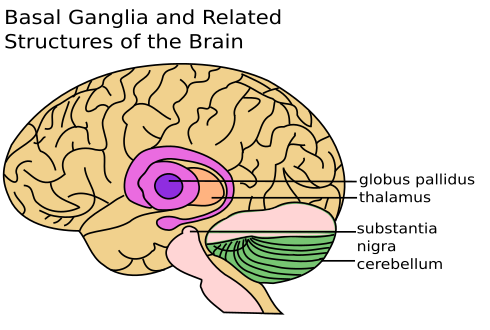
Parkinson's Disease is a neurodegenerative disorder that affects a person's central nervous system, it was discovered by James Parkinson in 1817 who initially called it the Shaking Palsy; Approximately 10,000 people in the UK are diagnosed with Parkinson's Disease each year. The primary symptoms are thought to be caused by insufficient creation and action of the neurotransmitter Dopamine which in turn causes a decreased stimulation of the motor cortex by the basal ganglia.


The Basal Ganglia/Nuclei is associated with motor function (control and learning), and action selection; it is the decrease in Dopamine levels of the Substantia Nigra that is believed to be the cause of Parkinson's Disease.


According to the Parkinson's Disease Society the symptoms for Parkinson's disease are as follows;
Motor symptoms have with three primary features:

-Tremor - which usually begins in one hand. This is the first symptom for 70% of people with Parkinson's
-Slowness of movement (bradykinesia) - people with Parkinson's may find that they have difficulty initiating movements or that performing movements takes longer.
-Stiffness or rigidity of muscles - problems with activities such as standing up from a chair or rolling over in bed may be experienced.

Various non-motor symptoms may also be experienced, for example:
-sleep disturbances
-constipation
-urinary urgency
-depression


Drug treatments of Parkinson's Disease consist of;

-"Dopamine replacements"; (inc Co-Benedopa/Madopar and Co-Careldopa/Sinemet. These medicines are combinations of L-DOPA (Levodopa), which breaks down in the body to form dopamine, and a second drug that ensures L-DOPA reaches your brain. These can provide long-term improvement; but also have side-effects, long-term problems of their own, and "on-off" symptoms ("on-off syndrome").

Side-effects include;

  • Sickness
  • Vomitting
  • Sleepiness

Long term problems include;

- Medication that mimics dopamine (dopamine agonists) - this can be taken combined with L-DOPA or prior to the inital use of L-DOPA (inc Pramipexole/Mirapexin, Ropinirole/Adartrel and Rotigotine/Neupro.

Side-effects include;

  • Sickness
  • Constipation
  • Headache
  • Sleepiness

- MAOIs (monoamine oxidase B inhibitors)/MAOI-Bs (inc Selegiline/Eldepryl and Rasagiline/Azilect). These prevent Dopamine breakdown and can be used to delay the need for L-DOPA.

Side effects include;

  • Low Blood Pressure

-COMT (catechol O-methyl transferase) inhibitors (inc Entacapone/Comtess and Tolcapone/Tasmar). This is a new medication that can be used alongside L-DOPA to prevent Dopamine breakdown, this has been introduced for the stage at which Dopamine replacement medications start to lose their effectiveness.

Side effects include;

  • Possible liver damage (regular blood testing is needed)

- Anticholinergic medication; this is designed to block the action of the neurotransmitter Acetylcholine. In effect this corrects the Dopamine and Acetylcholine balance, however this medication is less affective than those that actually replace lost Dopamine and only really aid with tremors.

Side effects include;

  • Dry Mouth
  • Constipation
  • Blurred Vision

Michael J.Fox, along with other advocates and fund raisers, is making it possible to find treatments for the symptomatic effects of Parkinson's disease along with treatment for the actual disorder. The honorary degree is well deserved! At the very least, this report reminded me to read his Biography (it's on my Amazon list), something tells me it will be a truely inspiring and intriguing read!

Saturday, 6 March 2010

Migraine relief?

Migraines, not just your average headache! I've been a sufferer for the past ten years, they are only just becoming manageable with diet, exercise, no drinking, no alcohol, 8-hr a night sleep sessions and plenty of water. I'd say my life is boring; except the exercise regime I keep involves rock climbing, training for charity runs (hopefully soon a half marathon), hiking, etc. I'm planning on taking up snowboarding at some point!

Anyways, migraines is a neurological condition that affects approximately one in four women and one in twelve men in the UK. The attacks alter your bodily perceptions (i.e. produce auras which can be olfactory or visual), alongside the headache pain (which is predominantly unilateral), and produces nausea.

According to "The International Classification of Headache Disorders, 2nd Edition" (ICHD-2) there are seven subclassifications of migraine;

1. Migraine without aura, or common migraine, involves migraine headaches that are not accompanied by an aura.

2 & 3. Migraine with aura usually involves migraine headaches accompanied by an aura. Less commonly, an aura can occur without a headache, or with a non-migraine headache. Two other varieties are Familial hemiplegic migraine and Sporadic hemiplegic migraine, in which a patient has migraines with aura and with accompanying motor weakness. If a close relative has had the same condition, it is called "familial", otherwise it is called "sporadic". Another variety is Basilar-type migraine, where a headache and aura are accompanied by difficulty speaking, vertigo, ringing in the ears, or a number of other brainstem-related symptoms, but not motor weakness. (This is my migraine diagnosis)

4. Childhood periodic syndromes that are commonly precursors of migraine include cyclical vomiting (occasional intense periods of vomiting), abdominal migraine (abdominal pain, usually accompanied by nausea), and benign paroxysmal vertigo of childhood (occasional attacks of vertigo).

5. Retinal migraine involves migraine headaches accompanied by visual disturbances or even blindness in one eye.

6. Complications of migraine describe migraine headaches and/or auras that are unusually long or unusually frequent, or associated with a seizure or brain lesion.

7. Probable migraine describes conditions that have some characteristics of migraines but where there is not enough evidence to diagnose it as a migraine with certainty.

According to the NHS there are five stages to an attack (though these are not experienced by all sufferers), these are;

1. 'Prodromal' (pre-headache) stage. Some people experience changes in mood, energy levels, behaviour and appetite, and sometimes aches and pains, several hours or even days before an attack.

2. Aura. In about one in six cases, a migraine is preceded by an aura. Symptoms include flashes of light or blind spots, difficulty focusing and seeing things as though through a broken mirror. This stage normally lasts around 15 minutes to an hour.

3. Headache stage. This is usually a pulsating or throbbing pain on one side of the head. There is often nausea or vomiting, extreme sensitivity to bright light and loud sounds, and a strong desire to lie down in a darkened room. This stage lasts for four to 72 hours.

4. Resolution stage. Most attacks gradually fade away. Some people find the headache stops suddenly after they have been sick. Sleep often relieves the symptoms.

5. 'Postdromal' or recovery phase. There may be a stage of exhaustion and weakness afterwards.

I have to admit the aura phase isn't as scary as the photophobia or heightened sensitivity to smells or phonophobia/Hyperacusis that I get pre-headache stage......especially when travelling on public transport. I was tested for anaemia when I was younger as along with these symptoms I also used to go completely pale and near faint, luckily I lost those symptoms as I got older.

The International Headache Society has created a criteria by which Migraines with aura, and those without aura, can be diagnosed as more often than not migraines are misdiagnosed or underdiagnosed. The criteria for Migraines without aura (the 5,4,3,2,1, criteria) are as follows;

5 or more attacks
4 hours to 3 days in duration
2 or more of - unilateral location, pulsating quality, moderate to severe pain, aggravation by or avoidance of routine physical activity
1 or more accompanying symptoms - nausea and/or vomiting, photophobia, phonophobia
To determine if aura only two attacks are needed, and it follows the POUNDing criteria;Pulsating, duration of 4–72 hOurs, Unilateral, Nausea, Disabling.

Migraines have no definitive cause, doctors assume it can be caused by allergic reactions, physical or emotional stress, changes in sleeping patterns, menstrual cycle and certain foods. I spent the past six years convincing my GP that my migraines were not menstrual cycle caused, if you get the same amount and intensity of migraine attacks when your are not on your period as you do on it then surely it is not hormonally related.

The reason this post is migraine related is because of this news report;

http://news.bbc.co.uk/1/hi/health/8547042.stm

A new hand-held device that is applied to the back of the head which in turn emits a single-pulse transcranial magnetic stimulation (sTMS) which is thought to disrupt the brain's electrical "aura causing" events. The initial trail has shown that 40% of patient's were pain free two hours after administering the device, with no serious side effects!

This device could give relief from migraine with aura, without the use of drugs!
Thursday, 4 March 2010

NHS test

Well, today was the day I went for the Numeracy, Literacy and a kind of "boundaries" test ready for the Support worker role I've accepted. I still cannot get over how amazing the red brick reception building is that sits in the centre of the secure hospital grounds; it fascinates and frightens me in one. This building used to house psychiatric patients when they were hidden from the world, this building will hold some truely disturbing memories within it's walls, and this building is the only thing on the grounds that shows the history of the unit. It has since evolved into a rehabilitation unit for adult learning disabilities, new clinical buildings replaced the old decrepid ones, and plenty of serene, calming greenery appeared.

The receptionist welcomed me with a smile and showed me through to the testing room, examiner already poised and ready to go. I sat down at the free desk and the examiner placed down three different test sheets, which made me gulp, I had only been expecting the numeracy and literacy tests. I also only had forty five minutes for all three. I think I may have let out a little whimper, though if I would have been questioned on it I would have denied all knowledge (all those years watching The X-Files totally paid off). I started with the numeracy test, which was incredibly basic after my last job (calculating drug dosages and fluid therapy rates) so felt particularly confident going into the literacy test,which reminded me a little bit of the quizzes you get in the newspaper. I then checked the time as it ticked by faster than I had hoped it would, with twenty minutes to spare I undertook the "boundaries" test paper, there was a picture at the top of the first page which showed a client hugging a support worker. The main questions were; what should you be prepared for when dealing with an aggressive client base, and what do you think of the hug in the picture? I'm not giving my answer as I could probably be identified by this. However, to aid those going for a job such as this, when dealing with an aggressive client it's best to keep in mind de-escalation techniques, control and restraint training, and tayloring your behaviour to theirs. As far as the hugging goes - that's personal opinion more than anything, but place emphasis on boundaries, if it's morally and ethically right to encourage this behaviour, and how it may change the roles (support worker and client base). I passed the numeracy and literacy tests with flying colours, and the boundaries test apparantly is to check I fully understand what is expected from me as a support worker. This was a pass too. It was an intriguing insight for myself as well as my future employers, with a twenty minute deadline you don't have a huge amount of time to mentally plan your answers, you just go with the flow.

I was free after filling in an enhanced CRB check, free to do as I liked. So, what did I do with my whole day off?......I watched Star Trek Enterprise, more specifically, the "In a Mirror, Darkly" the parallel universe episodes. I started out watching Enterprise because of a love of sci-fi, now I watch it because of a love of this Star Trek series and a huge girly crush on Dominic Keating.....particularly in the role of Major/Lt.Reed. Yes he is old enough to be my dad - but seriously girls, watch it and you'll understand....I'm still trying to work out if it's the jumpsuit, the fight scenes or just his accent! And for the guys - check out this specific episode if you have a thing about Vulcans or just Commander T-Pol (Jolene Blalock) in particular as the uniforms for the female roles and a bit revealing. Yes - I'm a trekkie, I'm a nerdling, I'm a geek, but hell, it makes me happy.

Tuesday, 2 March 2010

Trepanation???? Ouch!

The burrowing of a hole into a person's skull to reveal the dura mater as a treatment of intracranial diseases. This supposed pseudoscience was once the breakthrough treatment for epilepsy, migraines and serious mental illness (i.e. Schizophrenia); with evidence to suggest that survival rates were high and infection rates low. "During the Middle Ages and the Renaissance, trepanation was practiced as a cure for various ailments, including seizures and skull fractures. Out of eight skulls with trepanations from the 6th-8th centuries found in southwestern Germany, seven skulls show clear evidence of healing and survival after trepanation" - quote from Wiki.

Modern day surgery that is an enhanced version of this invasive procedure is classified as a Craniotomy; which is used as treatment for Traumatic Brain Injury (TBI) such as Subdural Haematoma, Brain Lesions, and Deep Brain Stimulators (treatment for Parkinson's Disease, Epilepsy and Cerebellar Tremor).


I suppose you're now wondering why I'm waffling on about such a subject? Well - I came across this wonderful article at New Scientist today on my break (advantages of being an IT technician at the moment);

http://www.newscientist.com/article/mg20227121.400-like-a-hole-in-the-head-the-return-of-trepanation.html

Trepanation as a treatment of Alzheimer's disease? I await the research!